Sushi counters have run on omakase for generations: sit down, say nothing, eat what the chef hands you. Gen Yamamoto, an eight-seat cocktail bar on a side street in Azabu-Juban, Tokyo, has been doing the same thing with drinks since 2013, and it is still one of the best cocktail bars in Japan. There is no menu. You pick a number - five, six or seven cocktails - and Yamamoto picks everything else, down to the Ibaraki chestnuts.
Eight Seats in Azabu-Juban
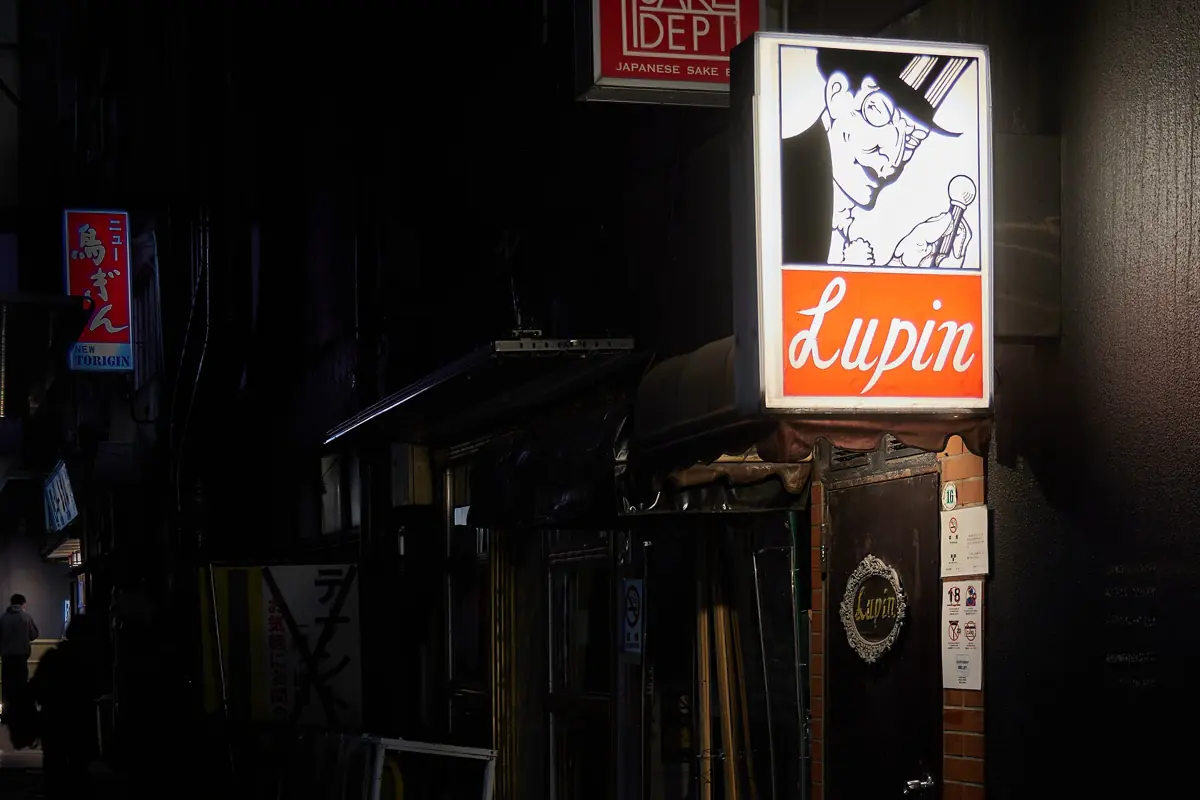
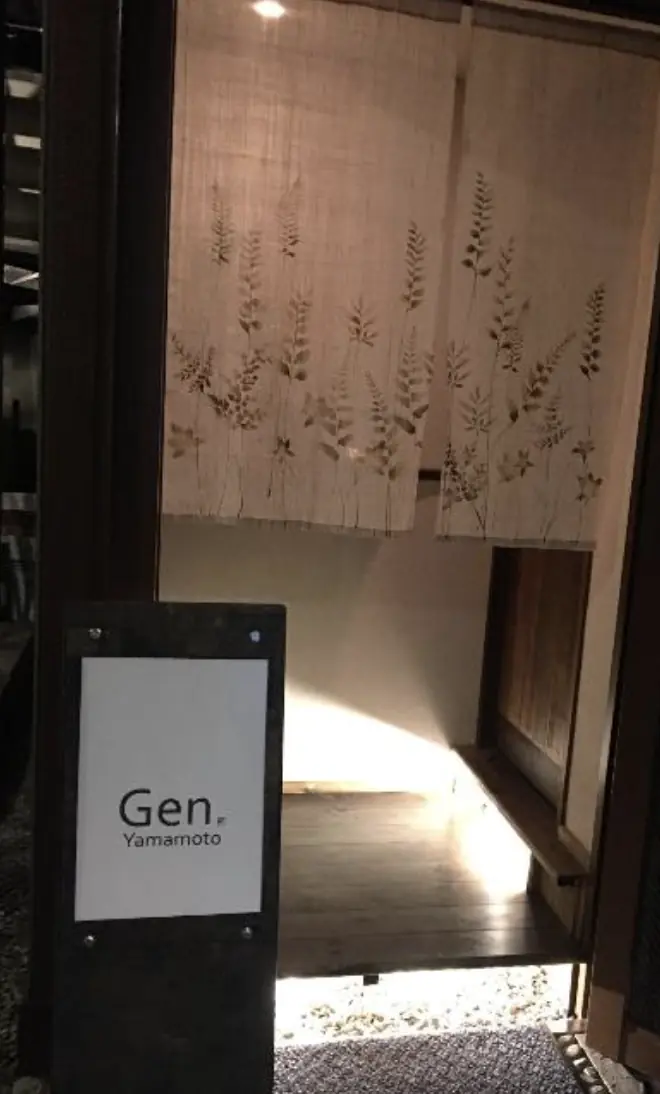
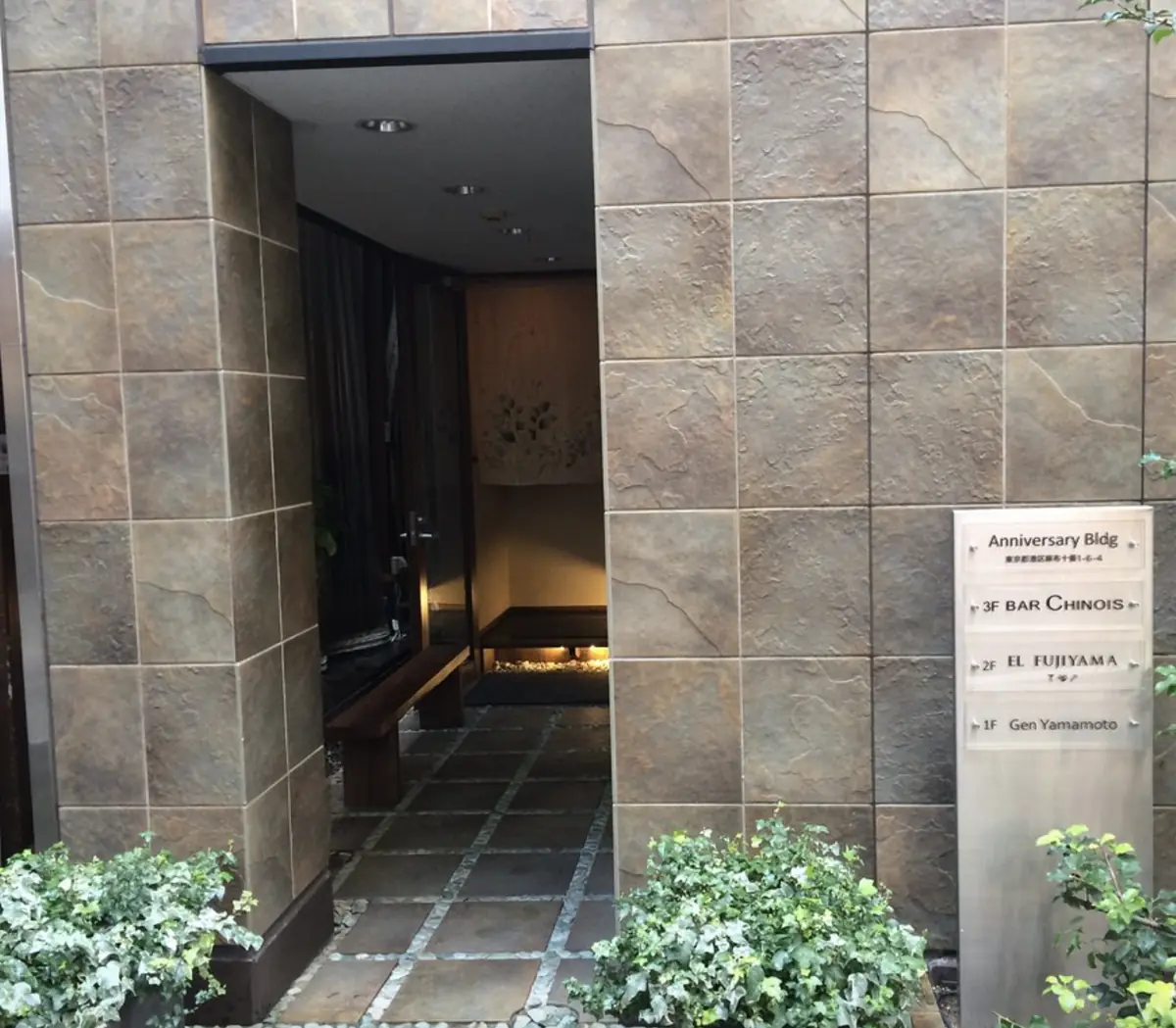
Azabu-Juban is a low-rise pocket wedged between the Roppongi towers and Minato's embassies, better known for its shopping street than its nightlife. The bar sits at street level in the Anniversary Building, a few minutes' walk from Azabu-Juban Station, and the way in involves none of the usual Tokyo theater: no callbox, no refrigerator door, no password (if you want your bar on a ninth floor behind a faded sticker, Bar BenFiddich in Nishi-Shinjuku has you covered). Here the trick is inside.
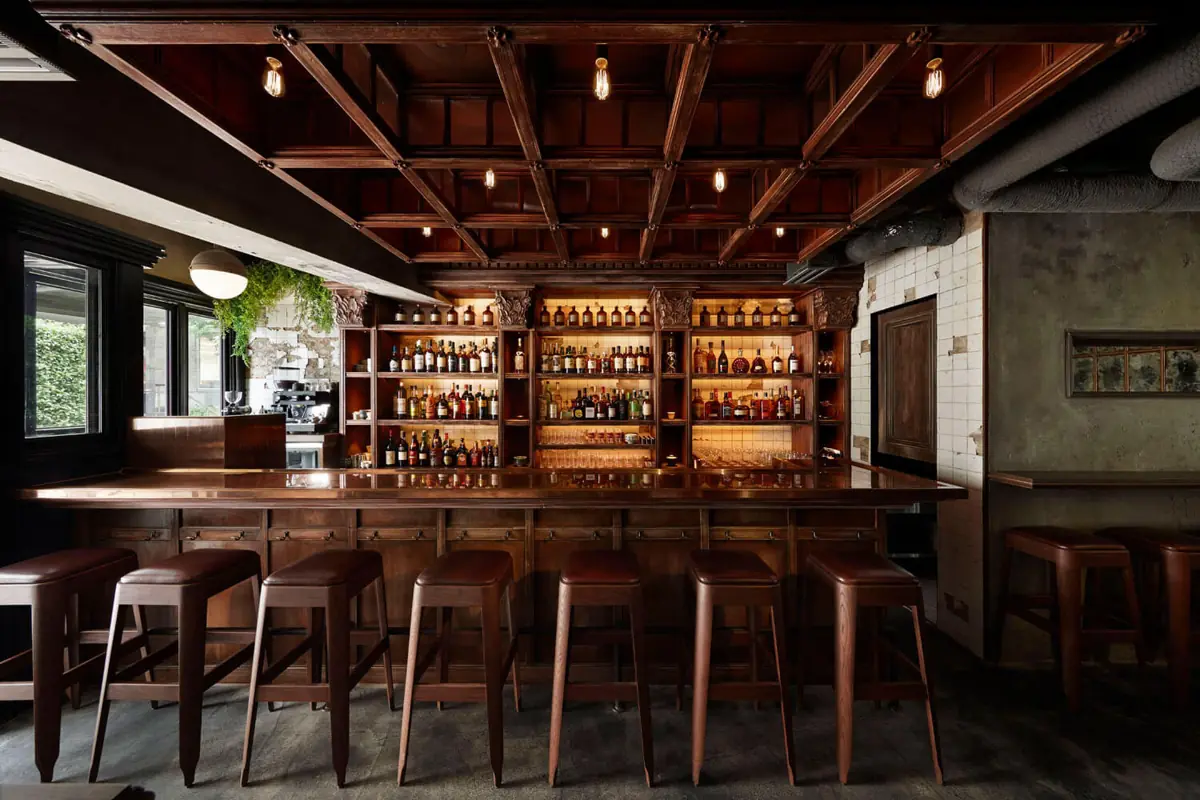
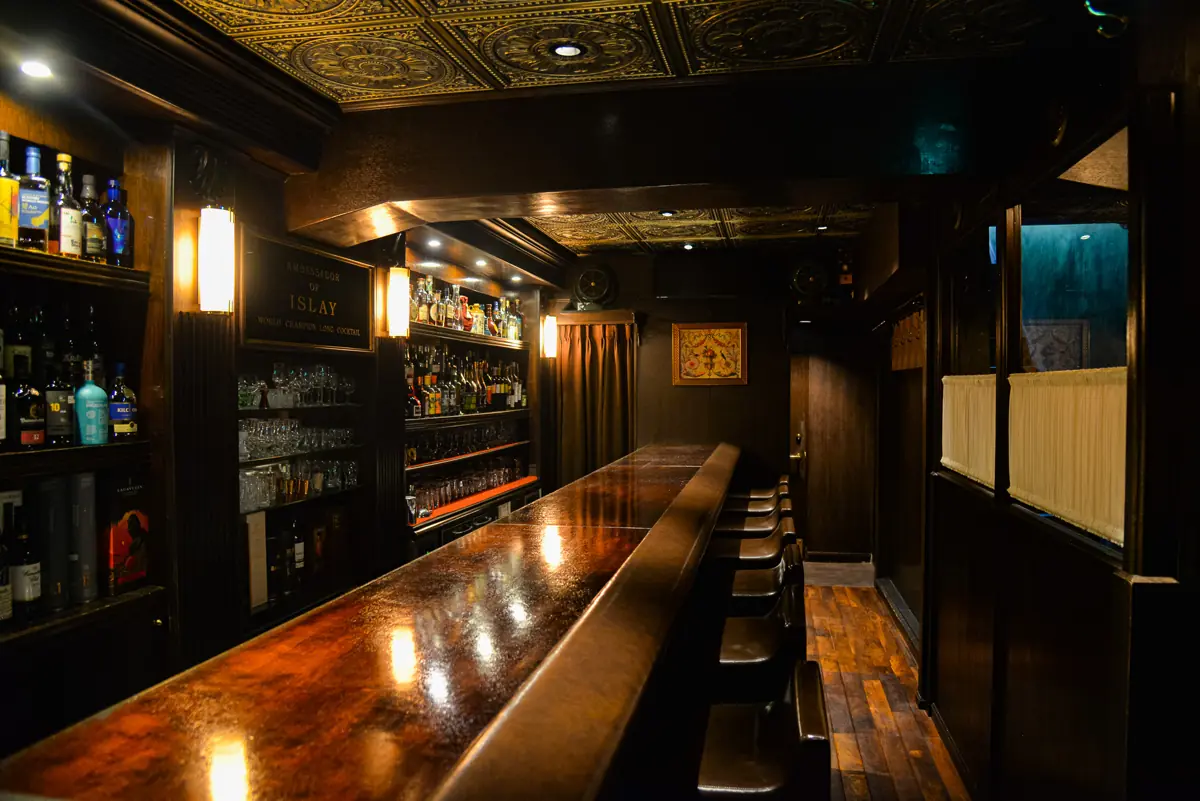
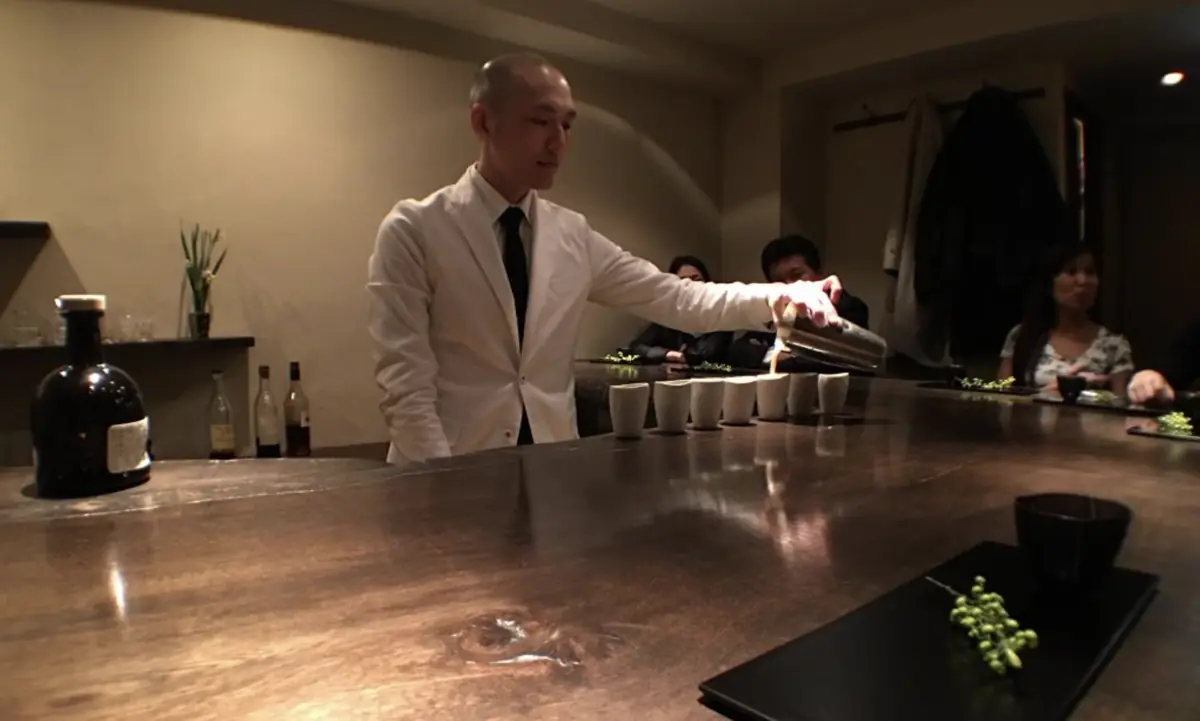
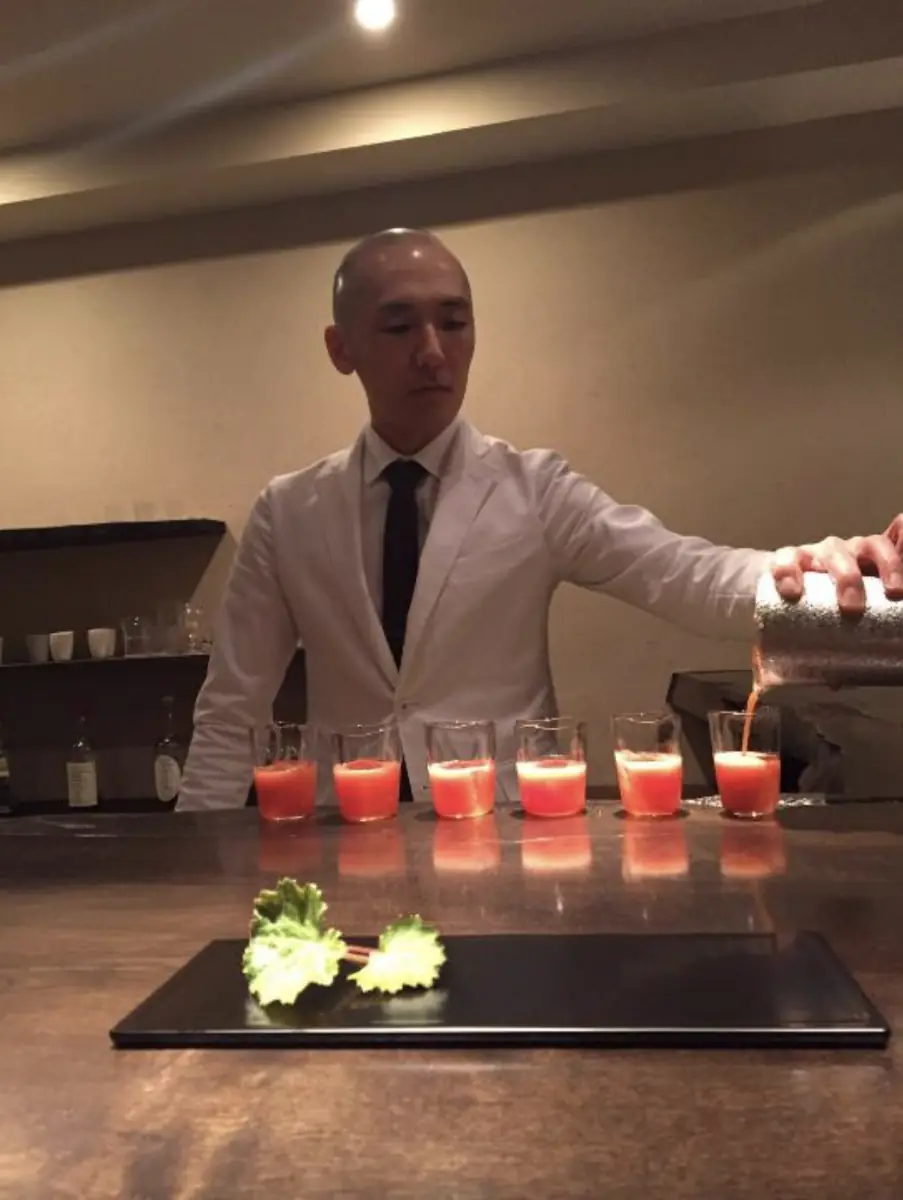
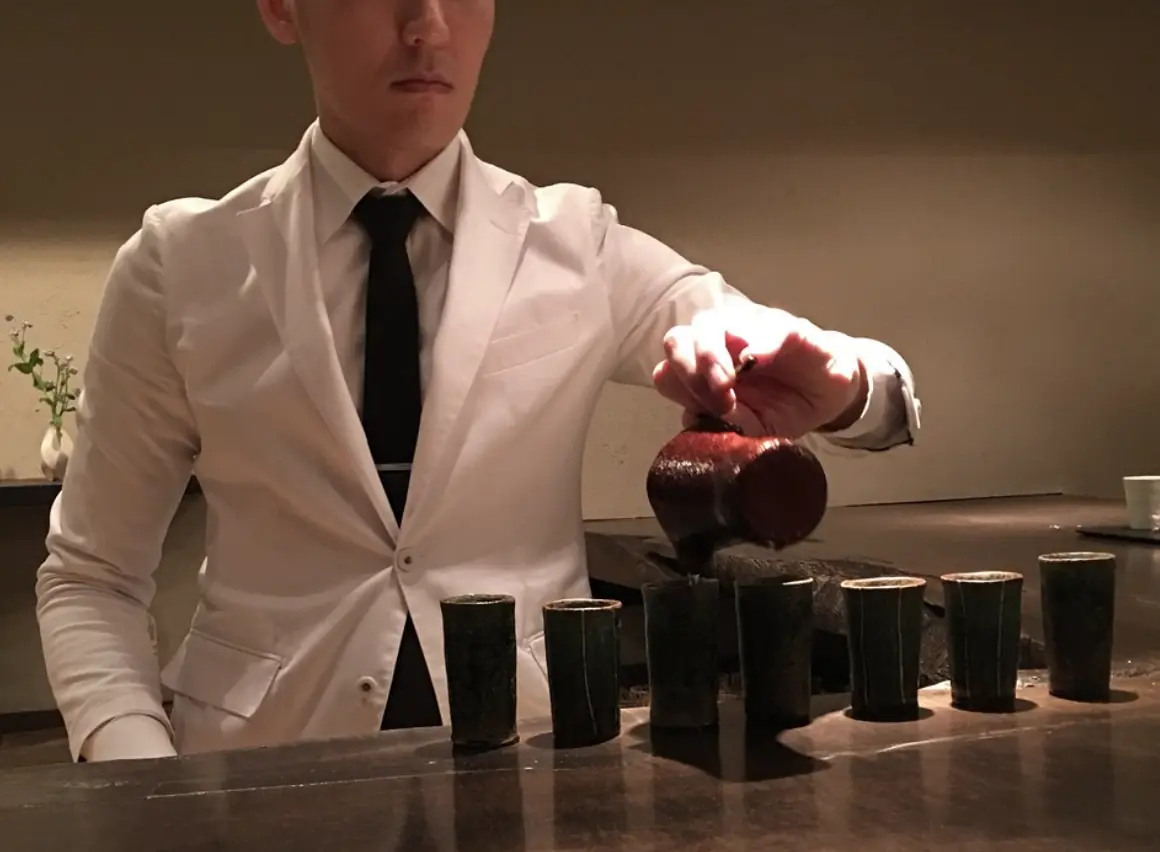
The room is a counter and very little else. That counter is a single slab cut from a 500-year-old mizunara, the Japanese oak distillers here use for whisky casks, which means the tree was already standing when the first Portuguese ship reached Japan. Eight stools face it. Yamamoto works behind it alone - he is the entire staff - and there is no music. The soundtrack is a knife on a board and whatever conversation eight strangers can manage. It is quieter than most libraries.
Leave It Up to Him
Omakase translates as "I'll leave it up to you," and Yamamoto earned the right to be left up to in New York. He joined David Bouley's team in late 2010 and the following April helped open Brushstroke, Bouley's kaiseki restaurant in Tribeca, where his cocktails made from fresh fruit and vegetables built a following. He came home to Tokyo in 2012 and opened this room a year later, one of the first bars anywhere to sell cocktails as a set course.
The format works like this. The drinks arrive one at a time over roughly 90 minutes, in small pours, and he explains each as he goes, in Japanese and English: which prefecture the fruit came from, why that spirit and not another. He only buys spirits whose makers disclose everything in the bottle. He stirs nearly everything, too. Shaking, he told Wine & Spirits, is mostly performance.
What's in the Glass at Gen Yamamoto
The lineup changes with the produce, so what follows is a sampler from recent seasons, not a promise. Every drink starts with a fruit or vegetable and one spirit, and the spirit is the junior partner.
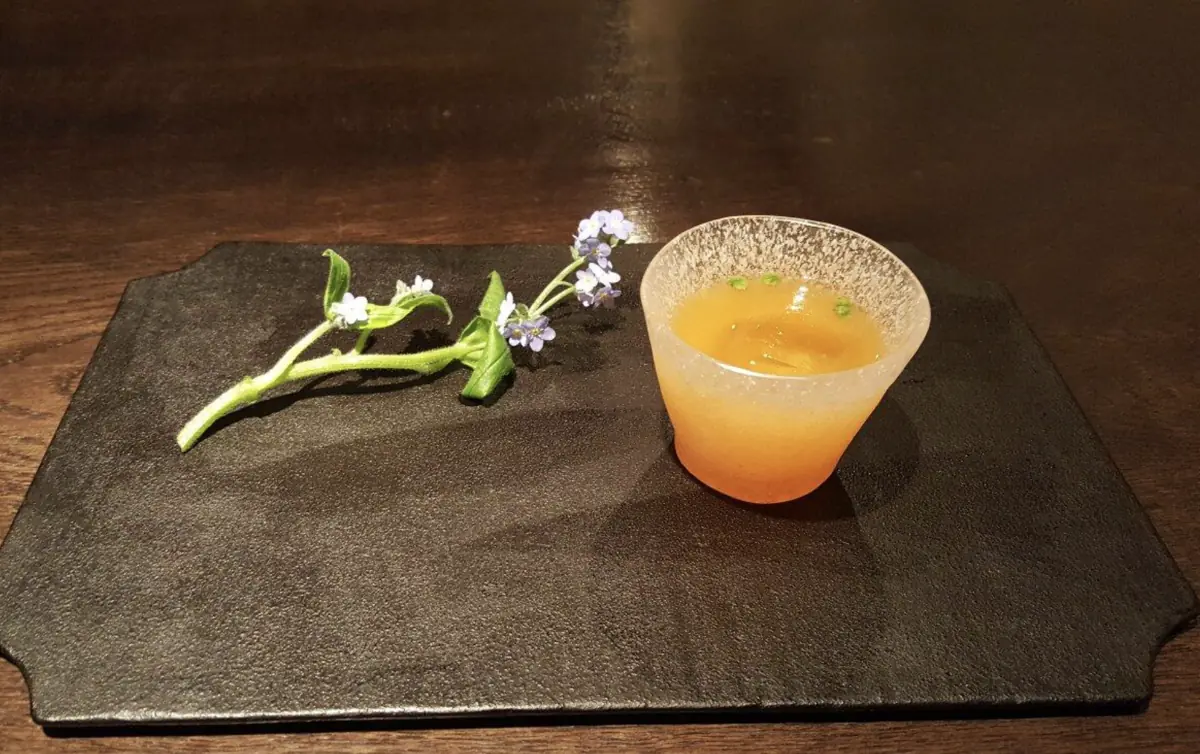
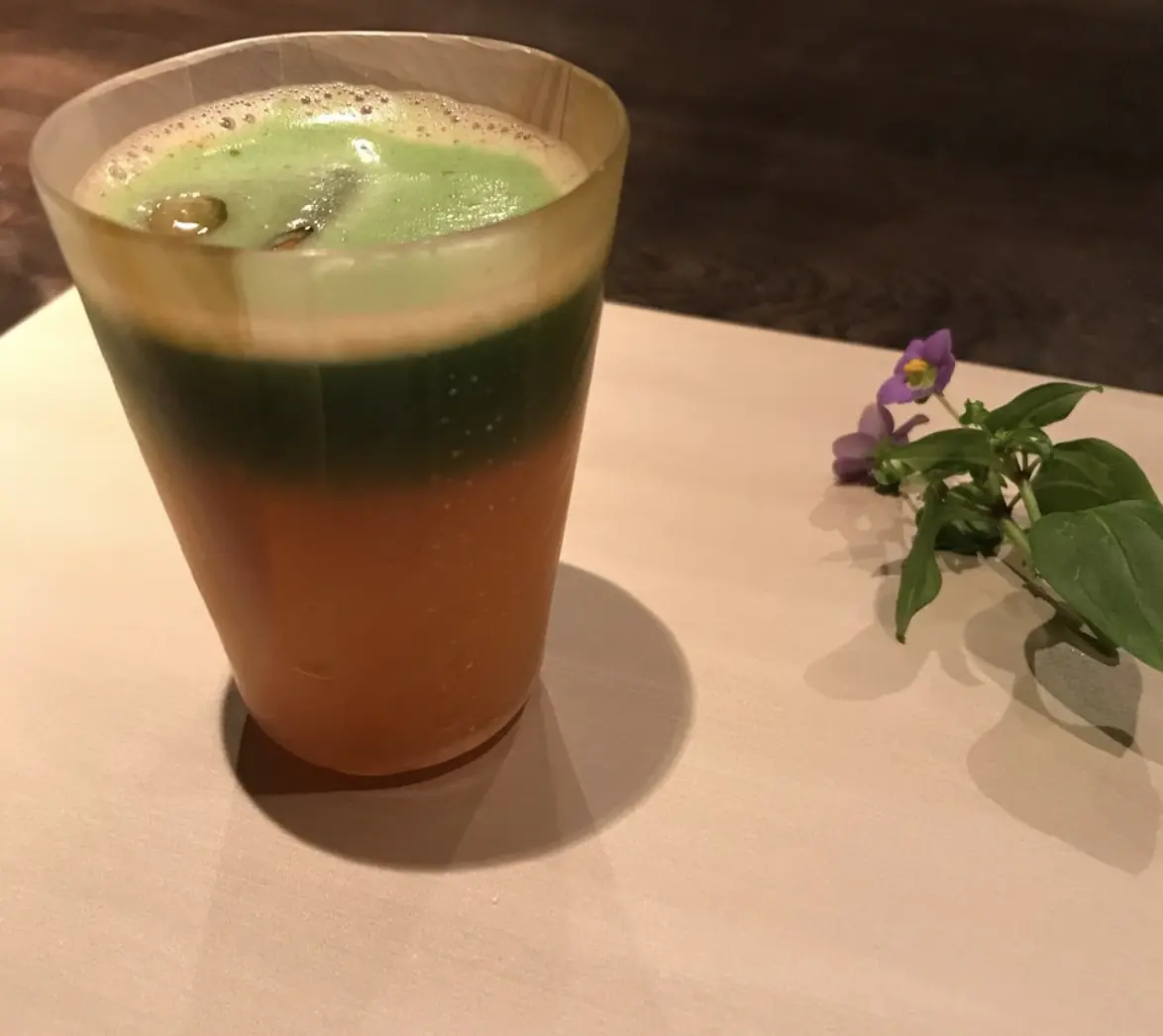
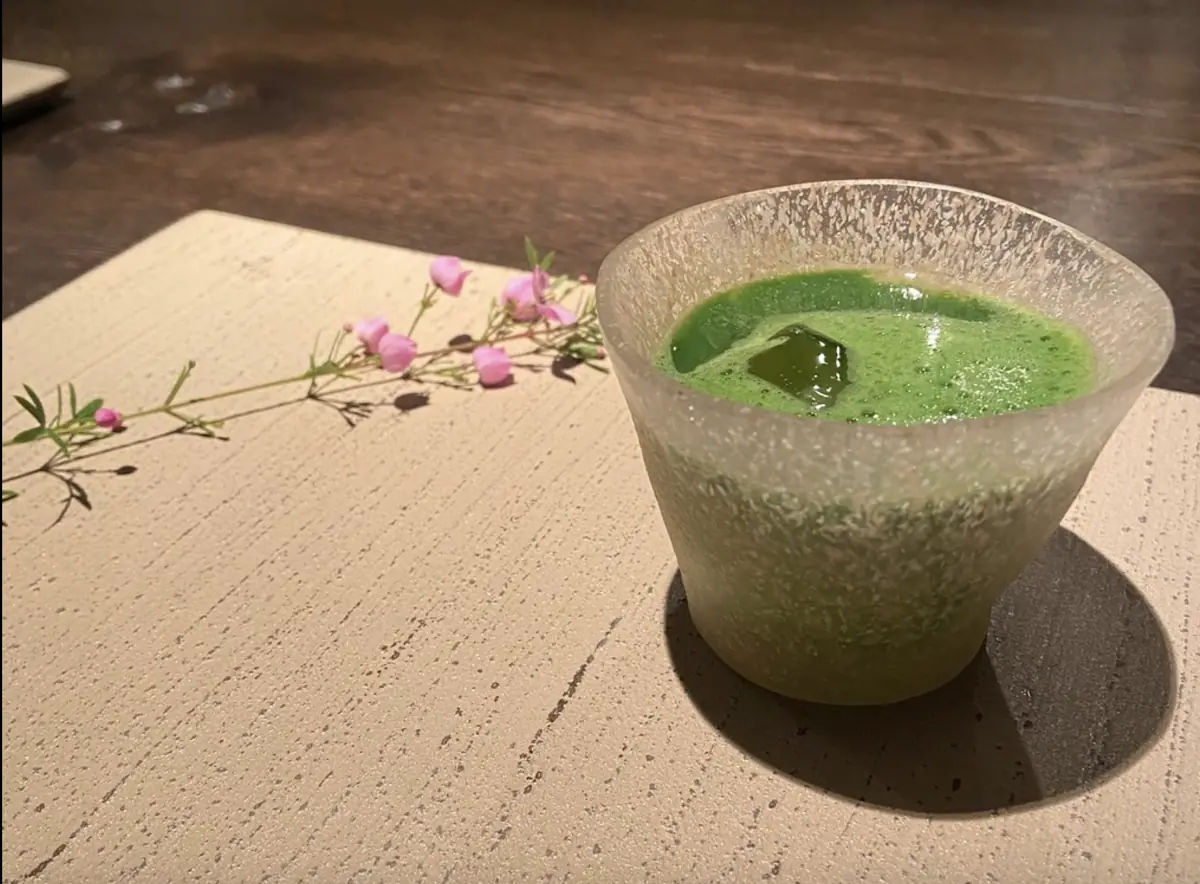
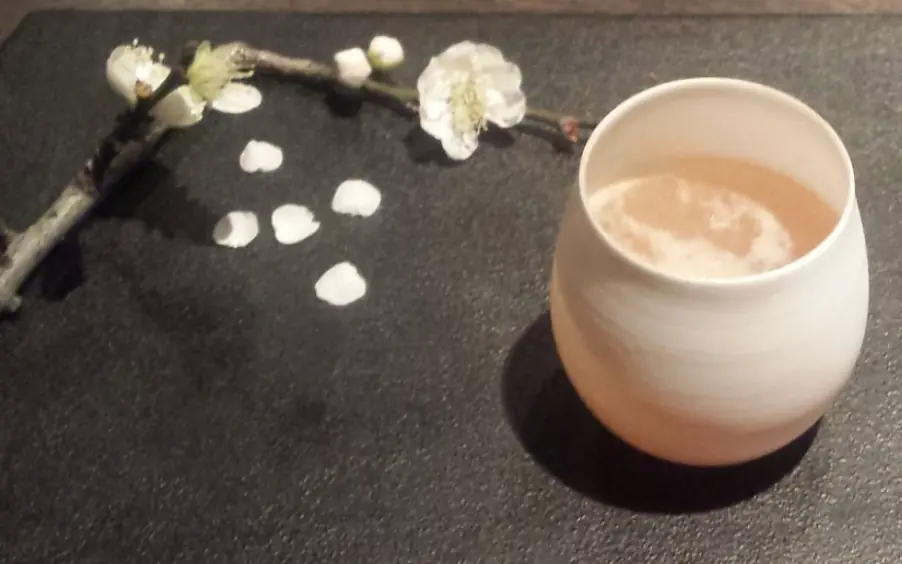
Rives gin from Spain with fresh tomato, tomato confiture and shiso tastes like a Shizuoka tomato that has been lightly bothered with juniper. Kochi ginger is blended with imo shochu, Ehime lemons, herbs and spices. Bijofu namazake from Kochi gets Ehime orange juice and grated wasabi. Vodka meets fresh-squeezed hassaku orange from Ehime and ko-cha black tea from Shizuoka. Earlier menus paired whiskey with ume plum, gin with fresh peach and wasabi, and vodka with green cantaloupe. The warm course is the sleeper: Dassai 50 junmai daiginjo sake, served warm, under a float of Tochiotome strawberry cream and mint, or warm whiskey with apple once the Hokkaido apples come in. The splurge pour, when it appears, is a 1984 Domaine Boingnères Bas-Armagnac muddled with roasted sweet potato and finished with chocolate shavings. In October 2026 the bar listed Hokkaido apples, grapes and Ibaraki chestnuts as what was in the kitchen.
None of these will knock you over. The pours are light on alcohol, which is not the same as light; six of them in 90 minutes add up, and you notice on the walk back to the station. Each arrives in glassware or ceramics made by local artists.
Booking a Seat (Pick Up the Phone)
Three courses: five cocktails for ¥8,800 (about $59), six for ¥10,000 (about $67), seven for ¥11,000 (about $73), tax included, plus a ¥1,000 seat charge. Reservations are required and the bar takes them one way only: by phone, from the person who will be sitting in the seat, starting seven days out. Someone answers between noon and 3pm or after 10:30pm Tokyo time. Doors open at 3pm Tuesday through Saturday, the last seating is 9pm, and it is closed Sunday and Monday. Cards are accepted. Eight seats and one bartender means a no-show gets noticed.
If a week's notice doesn't fit your itinerary, Bar Orchard in Ginza runs a point-at-the-fruit, no-menu format with considerably more liquid nitrogen, and our Top 5 cocktail bars in Japan guide covers the rest of the country.
When we first wrote this up in 2023, four drinks ran ¥6,200. The four-drink course is gone and everything costs more, which is roughly what happens to any eight-seat room that keeps getting booked out. Go in autumn. The chestnuts are in.